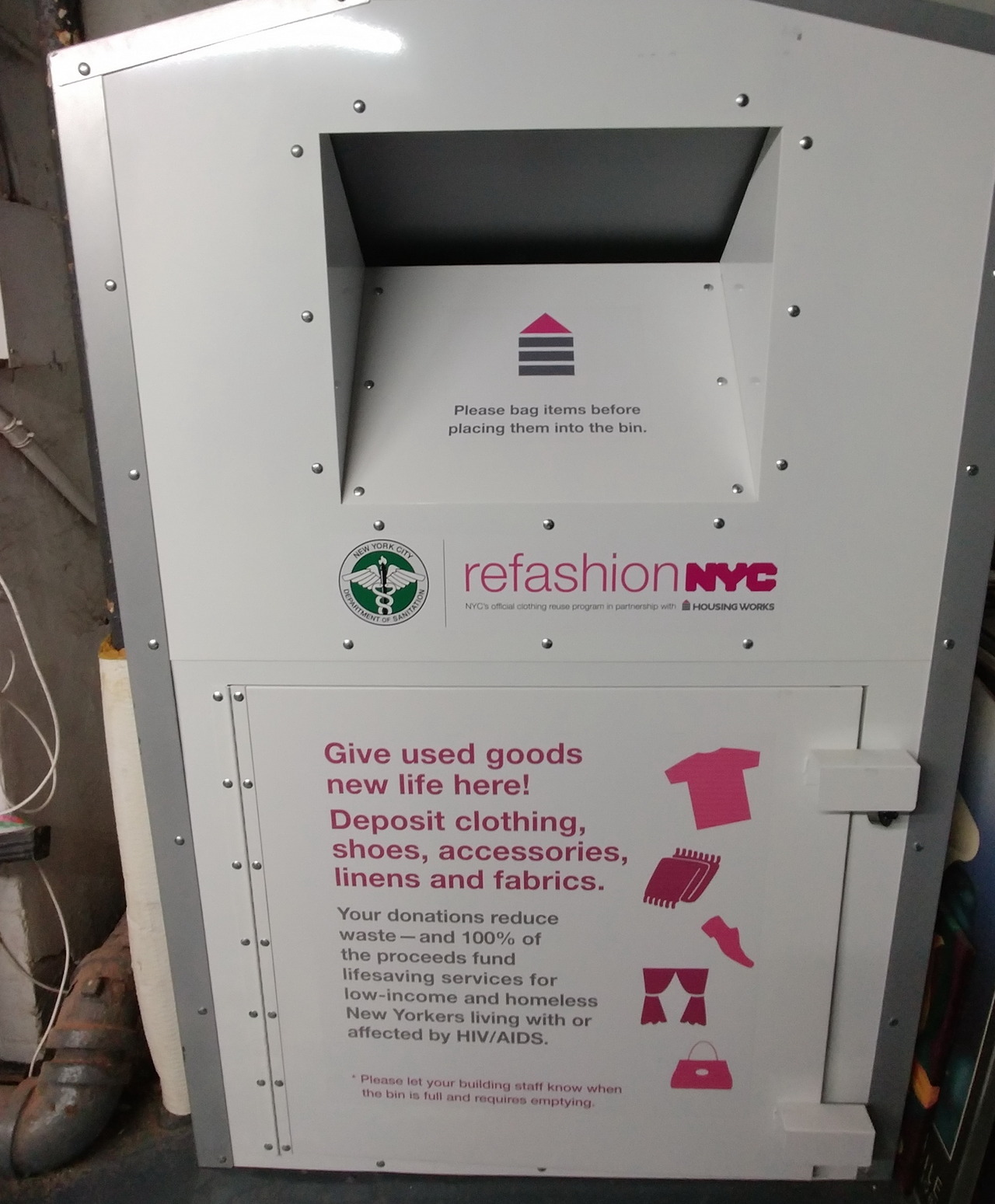
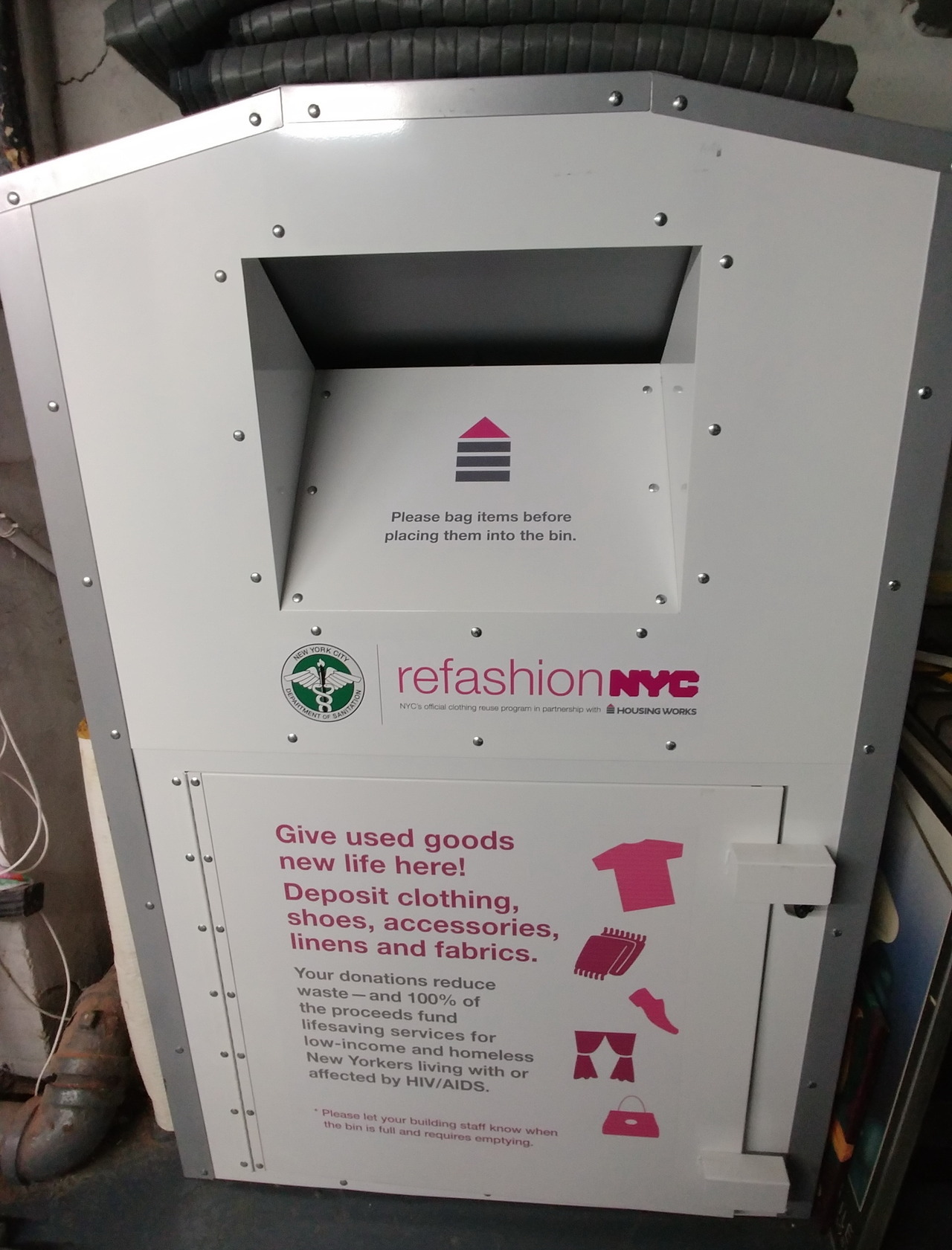
To: Residents of The Braender Condominium From: Bianca Taveras, Account Executive Date: March 1, 2019 Re: Textile Recycling Bin Dear Residents: We are pleased to inform you that The Braender Condominium has enrolled with Department of Sanitation’s free textile recycling program, called “E- Fashion” which is administered in partnership with Housing Works. The large bin is located in the basement. To access it, pass through the door opposite the elevator (to the right of the laundry room) and the bin is located on the right.
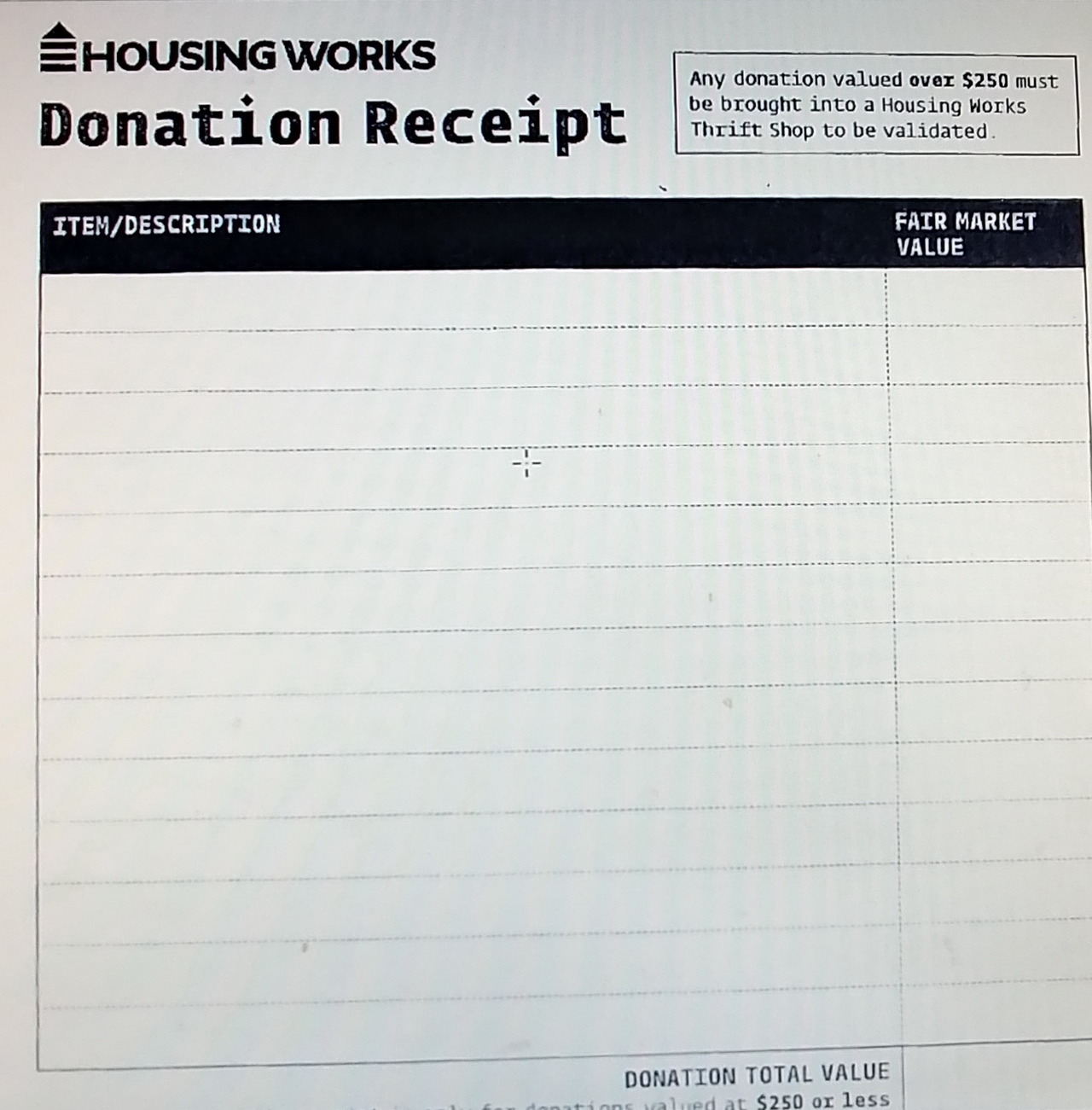
Tear-off tax deduction receipts are available on the bin, and in the BuildingLink Library. Accompanying this memo is the “E-fashion” flyer from the Dept. of Sanitation/Housing Works.
We hope you’ll find this a useful convenience, with a worthwhile cause. Thank you.
RefashionNYC!
The
NYC Department of Sanitation offers additional recycling services for
residential apartment buildings with 10 or more units.
Electronics:
e-cycleNYC
(nyc.gov/ecycle) provides eligible buildings with free bins and pickup
service for responsible recycling. As of January 2015, it is illegal to
discard electronics in the trash.
Food scraps:
NYC
Organics Collection (nyc.gov/organics) provides eligible buildings with
curbside collection of residents’ food scraps, food-soiled paper, and
yard waste.
What is re-fashioNYC? re-fashioNYC is a free and convenient clothing donation and recycling service available to apartment, office, and commercial buildings. The service is provided by the NYC Department of Sanitation and Housing Works. In contrast to for-profit used clothing companies that supply similar collection bins, re-fashioNYC is 100% nonprofit and charitable.
Why Join? Help New Yorkers. All proceeds from donations support the charitable mission of Housing Works to end the dual crises of homelessness and AIDS. Get tax deductions. Tax receipts for up to $250 are available directly on the bin. Keep valuable materials from going to landfills. Every year NYC residents throw away approximately 200,000 tons of clothing, towels, blankets, curtains, shoes, handbags, belts, and other textiles and apparel. That’s nearly the weight of 900 Statues of Liberty!
How It Works We will visit your building to discuss how many donation bins you want, what sizes are best, and where they should be placed. The re-fashioNYC donation bin is offered in two sizes: Small (2’ deep x 4’ wide x 6’ high) Large (3.5’ deep x 4’ wide x 6’ high) When the bin is full, simply let us know by calling or emailing us. We will pick up the donations within five business days.
How to Enroll To receive a re-fashioNYC bin in your apartment, office, or commercial building, complete an online inquiry form at nyc.gov/refashion.
What Happens to Donations? Some donations are sold in Housing Works thrift shops throughout NYC, including the Buy-the-Bag store in Brooklyn. Some items are donated to Haiti or sent to other nonprofit thrift shops. The rest are sold to a textile merchant for recycling or exported to overseas markets.
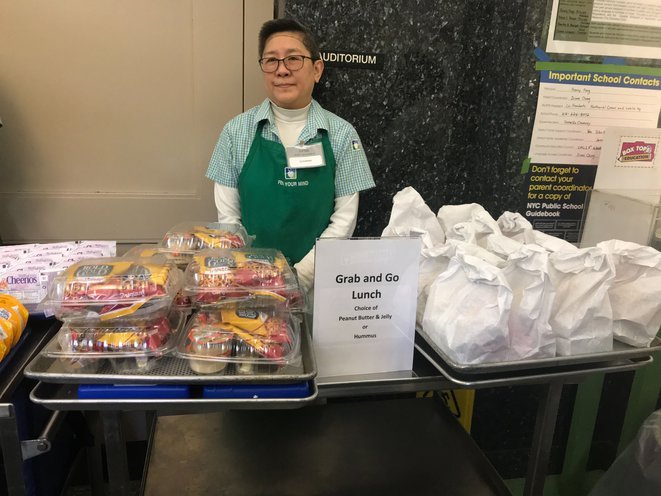
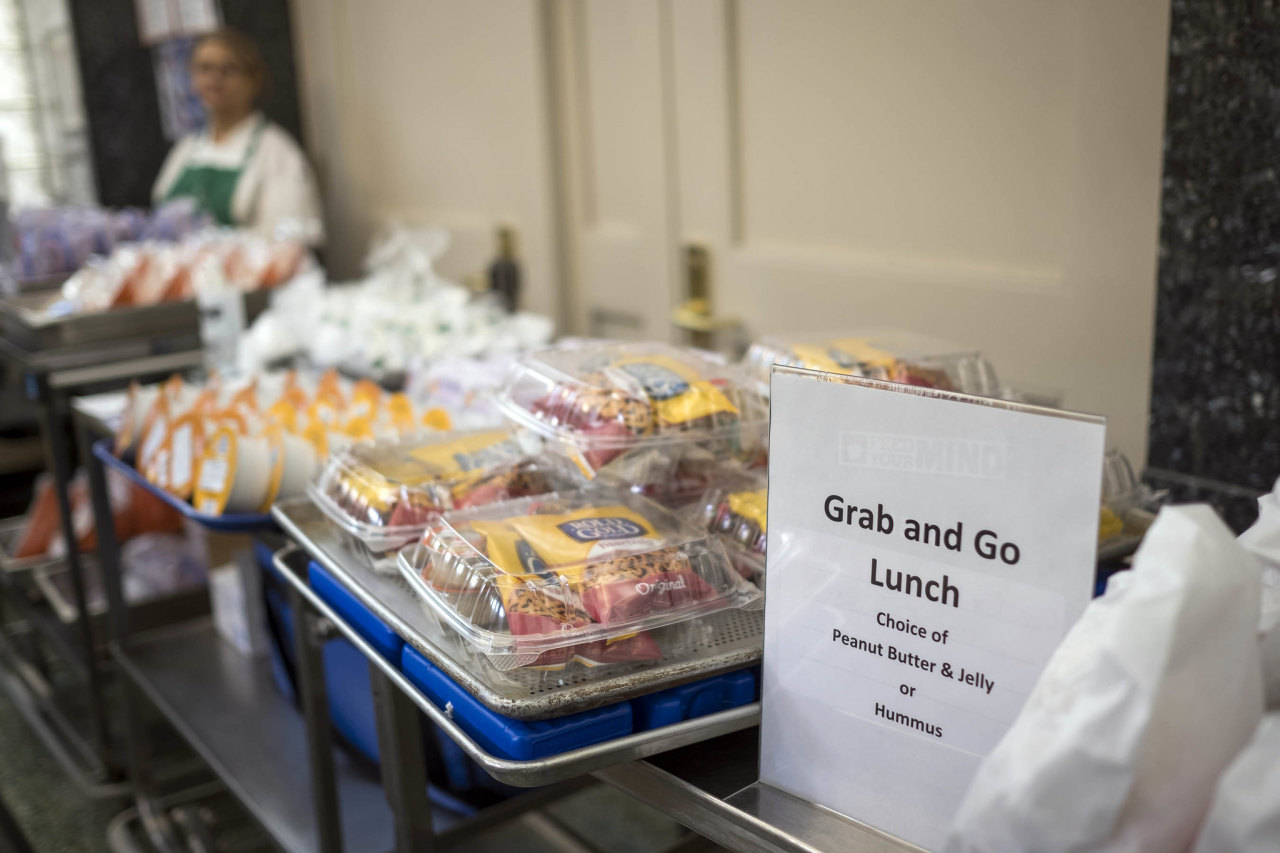
The New York City Department of Education is committed to making three free meals available daily for any New Yorker. Any New Yorker who wants one can get three free meals a day at more than 400 Meal Hubs across the city
Use our Meal Hub lookup tool to find a location near you!
City Feeding NYers in Need as Incomes Stall During Pandemic
By Spectrum News Staff New York City
PUBLISHED Apr. 07, 2020
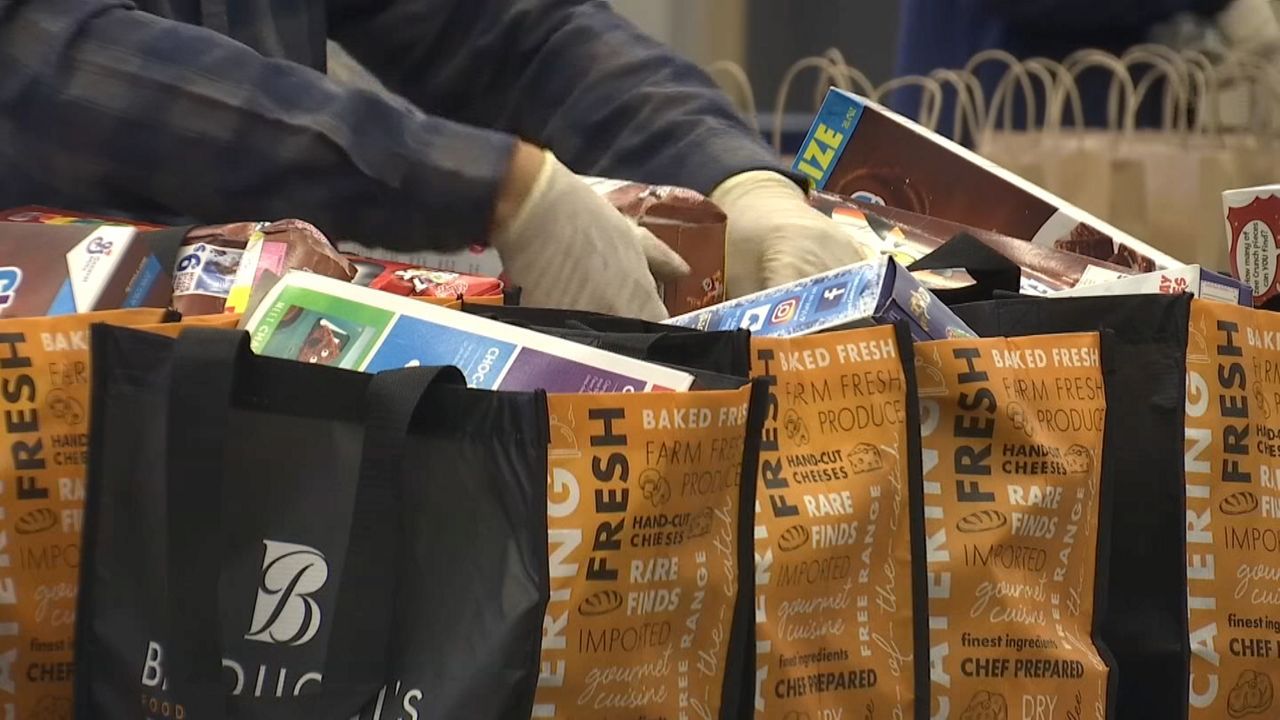
NEW YORK - Mayor Bill de Blasio on Tuesday announced the city has helped provide more than 2.6 million meals to New Yorkers in need over the last three weeks.
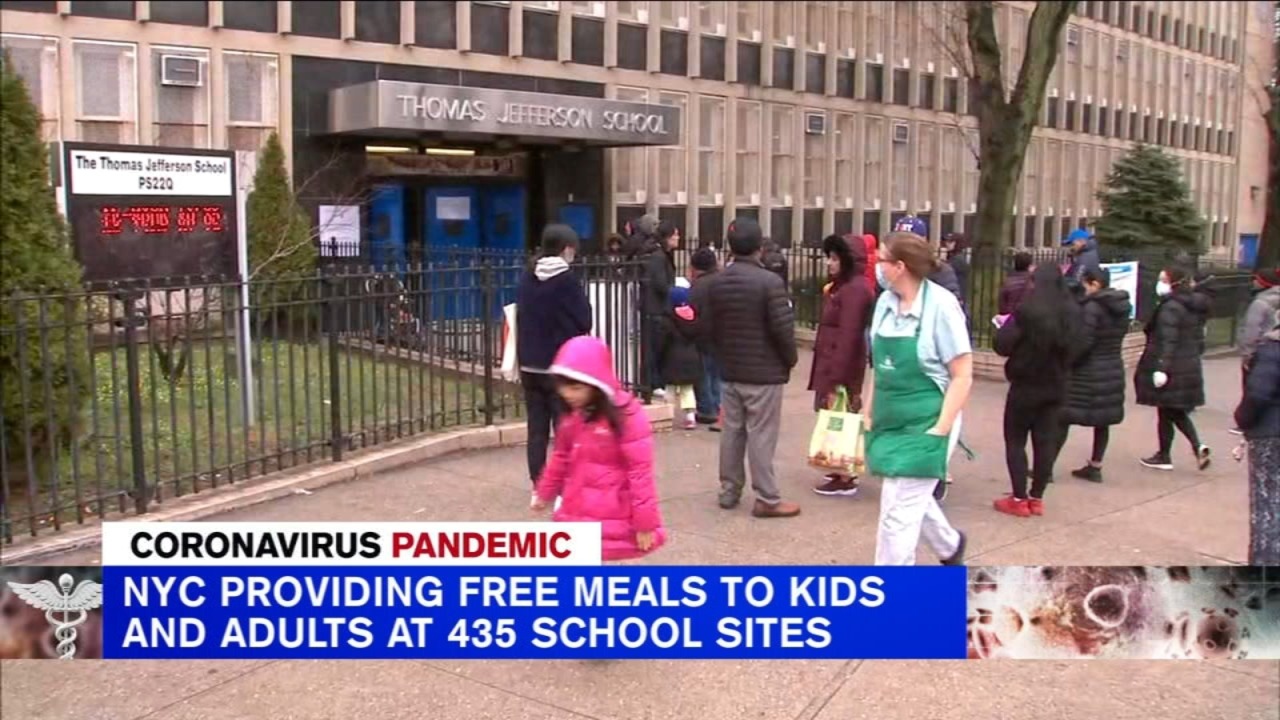
The city is now expanding its free meals program, which was initially just for public school students, to cover any adult.
Seniors who have difficulty leaving their homes to pick up meals will be able to receive delivery service.
The mayor says there are now 435 meal pick up sites across the five boroughs.
If you need meals you can text FOOD or COMIDA
to 877-877 to find your nearest pick up site.
"We will not let any new yorker go hungry. Literally. We will not let any new yorker go hungry. we have been planning, since the beginning of this crisis, to address the hunger problem," De Blasio said.
The mayor also delivered a positive update on the coronavirus pandemic, saying the city's ventilator supply will now last through this week.
He says there's been a slight improvement in the number of patients hospitalized for the virus. But he cautioned that the city is not out of the woods just yet.
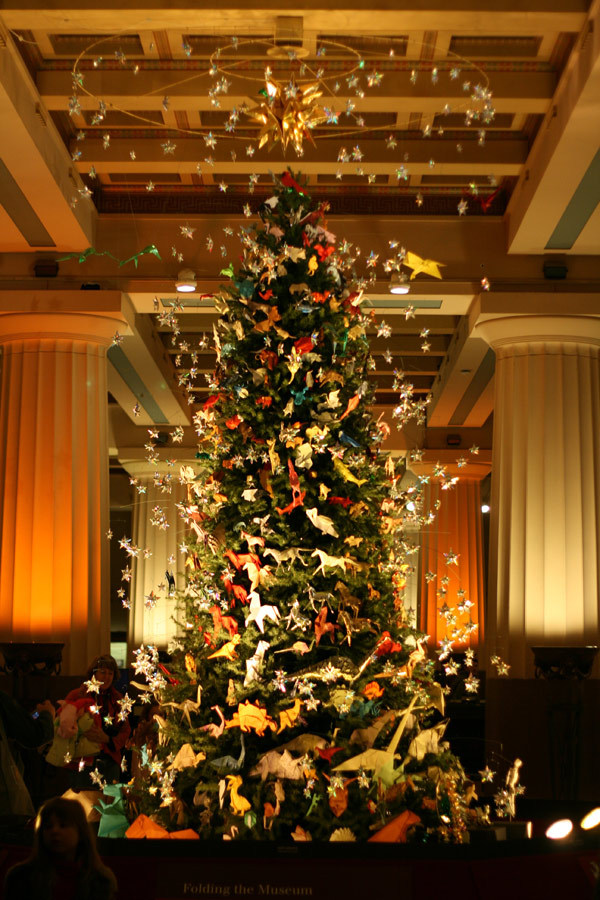
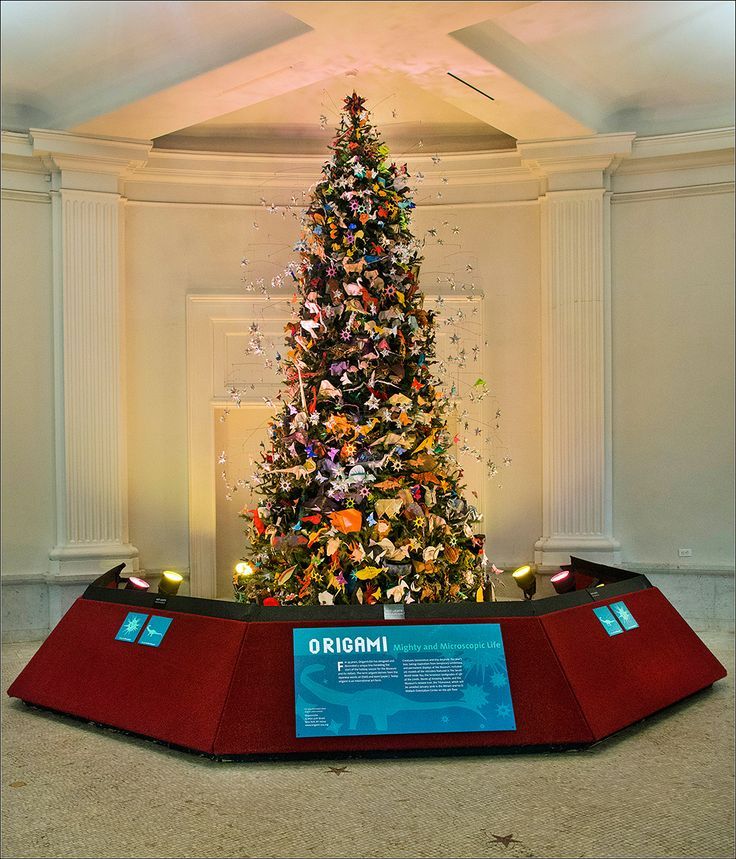
An annual tradition, the delightfully decorated Origami Holiday Tree has marked the start of the holiday season at the Museum for more than 30 years.
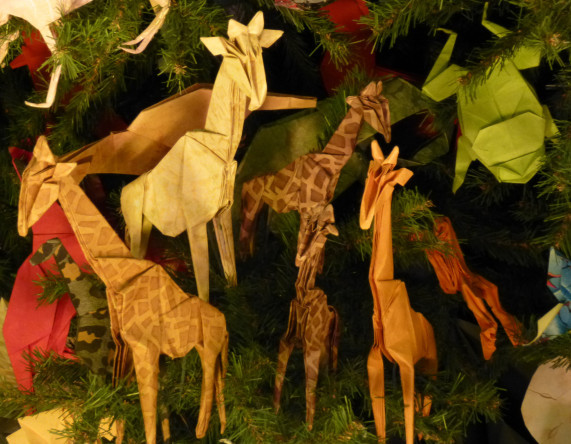
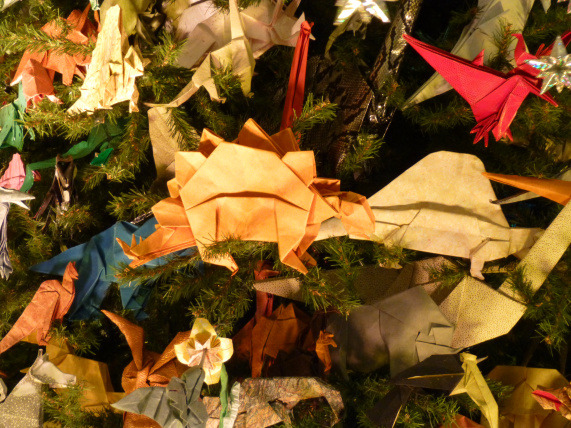
The tree is decorated with handmade origami models inspired by items in the permanent halls, current exhibitions, and Museum collections. Volunteers began folding in March to complete the hundreds of creations displayed on the tree.
During the holiday season, knowledgeable volunteers will be on hand to teach visitors of all ages the art of origami folding.
🎄 🎄🎄🎄 🎄🎄🎄 🎄🎄🎄 🎄🎄🎄 🎄🎄🎄 🎄🎄🎄 🎄🎄🎄 🎄🎄🎄 🎄🎄
Origami Holiday Tree 2011 🎄 🎄 👇 VIDEO 👇 🎄 🎄
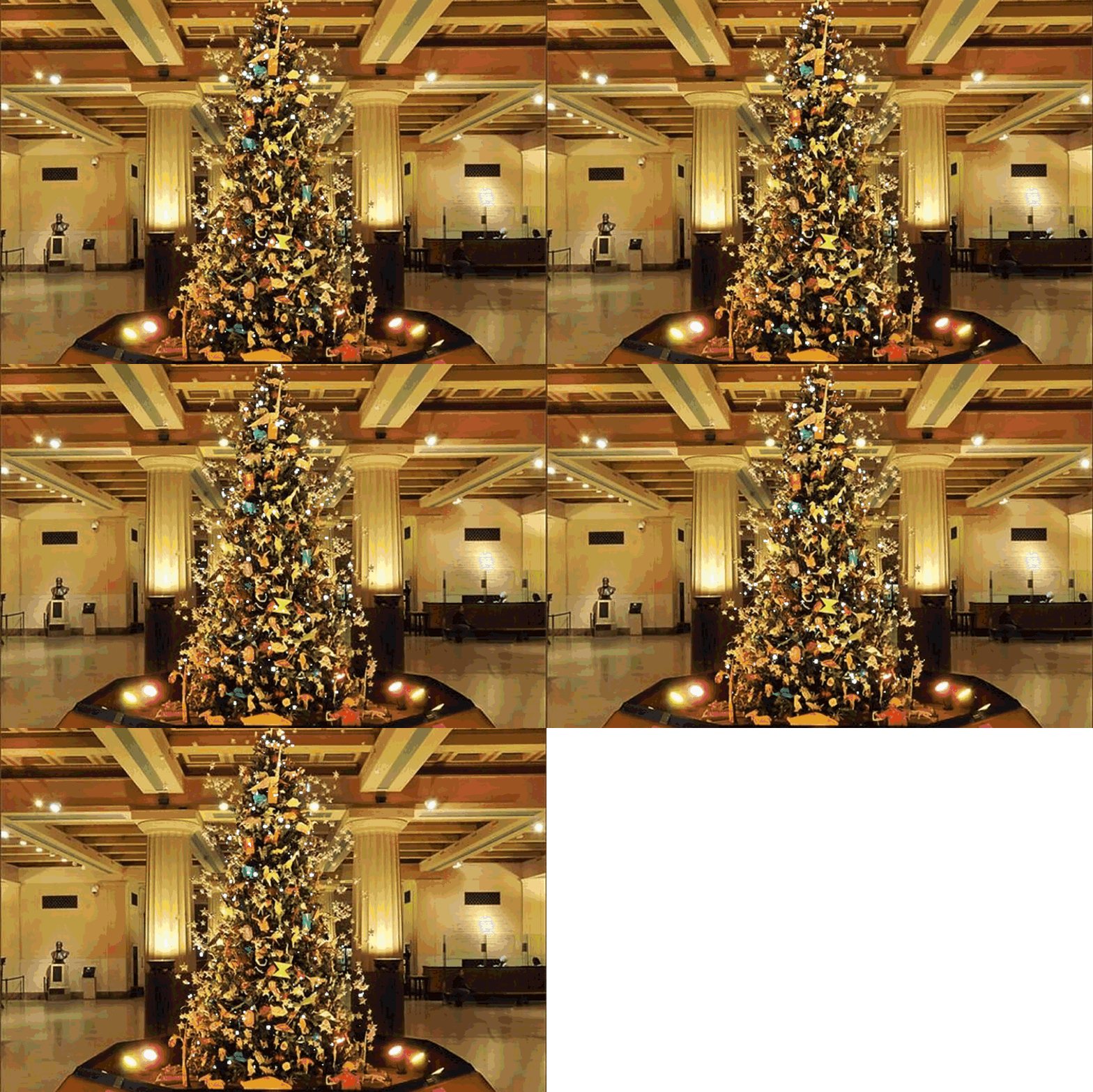
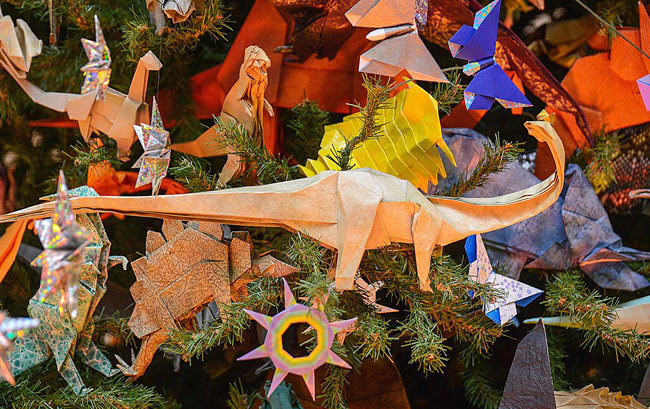
On the morning of Monday, November 21, the Origami Holiday Tree was lit in the first-floor Grand Gallery by the 77th Street exit. The display pays tribute to some of the Museum's "biggest and best" displays, with ornaments that include a blue whale, highlights from The World's Largest Dinosaurs, and a space shuttle as a nod to the Museum's latest special exhibition, Beyond Planet Earth: The Future of Space Exploration.
Celebrating sheer size and scope, these origami models represent some of the largest natural and cultural exhibits on display throughout the Museum.
Watch the video or see a few of the ornaments.
Credits: Photography: Andrew Cribb
Music: Josh Rutner Quintet
🎄 🎄🎄🎄 🎄🎄🎄 🎄🎄🎄 🎄🎄🎄 🎄🎄🎄 🎄🎄🎄 🎄🎄🎄 🎄🎄🎄 🎄🎄
🎄 🎄🎄🎄 🎄🎄🎄 🎄🎄
The Origami Holiday Tree
Location: Astor Turret on the fourth floor
November 20, 2017—January 7, 2018
🎄 🎄🎄🎄 🎄🎄🎄 🎄🎄
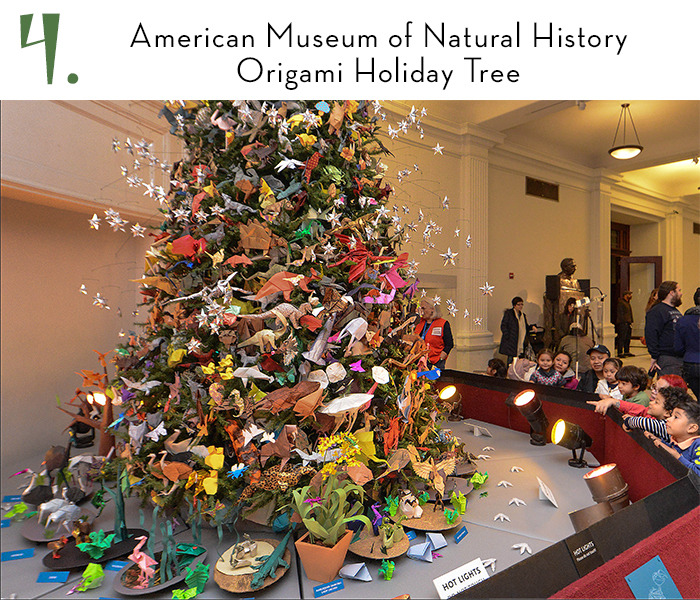
Visit the American Museum of Natural History this holiday season to see one of New York’s most beloved displays, the Origami Holiday Tree—an annual tradition for more than forty years. Produced in partnership with OrigamiUSA, the tree is delightfully decorated with more than 800 hand-folded paper models created by local, national, and international origami artists.
Feeling crafty? Volunteers from OrigamiUSA will be on hand at the Museum to teach paper folding to visitors of all ages.
The Origami Holiday Tree is a beloved annual Tradition at the Museum.
AMNH/D. Finnin
One 13-Foot Tree, 1,000 Origami Models:
A Spectacular Museum Tradition
Early each year, as the days begin to get a bit longer and the first signs of spring crop up in Central Park, Ros Joyce and Talo Kawasaki, volunteers from OrigamiUSA and the designers of the Museum’s Origami Holiday Tree start planning for the year ahead.
They begin combing the Museum’s halls in search of inspiration—going from floor to floor to decide on a perfect theme and to find just the right exhibits to re-create as origami models on the tree.
Precedent is no limit: “Often,” says Joyce, “we see something in the Museum that we want on the tree that has never been folded, so we have to design a model and find a way to fold it.”
With a theme in place, in April the team is ready for action. Lists of models are compiled, paper of many colors and textures is purchased, and volunteers—both children and adults—are enlisted from all over the world and as far away as Japan to fold the intricately complex models—some of which can take days or even weeks to perfect. Eventually, the volunteers create hundreds of new models.
After months of folding, in late September the origami pieces begin arriving at the Museum, where the nonprofit OrigamiUSA is housed, just in time for Joyce and Kawasaki to sift through the archives to see which additional models they will need to fill out the tree. The Origami Holiday Tree has been a feature of the Museum’s winter season for more than 40 years; with more than four decades of origami neatly stashed in ten large boxes there is no shortage to the selection.
Some of the highlights include a forty-year-old model of a pterosaur, an extinct vertebrate that was the first to evolve powered flight folded for one of the first origami trees in the early 1970s; a ferocious saber-tooth tiger, and a giant star mobile made up of more than 30 smaller pieces that decorates the top of the tree.
Once the model selections have been made Joyce and Kawasaki begin finalizing the arrangement and their sketches for the tree. “Ultimately we look at the color, size, and texture,” Joyce explains. “We sketch to see how the models are going to fit together to give the tree depth and shape.”
With the final decisions made, after nearly a year of preparation, Joyce, Kawasaki, and the team have only four days to decorate the 13-foot tree before the crowds begin lining up the Monday before Thanksgiving. “It’s a long process but it’s a labor of love,” Joyce says. “In the end it’s all worth it to see the kids and adults light up when they see the tree year after year.”